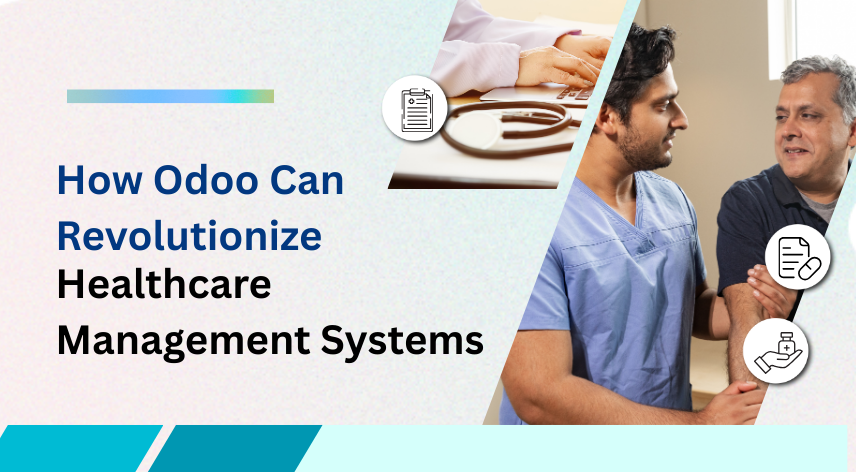
How Odoo Can Revolutionize Healthcare Management Systems
The healthcare industry is undergoing a massive digital transformation driven by data accessibility, patient centric care, and integrated operational workflows. Odoo, a powerful open source ERP platform, is emerging as a revolutionary solution for hospitals, clinics, laboratories, pharmacies, and multi branch healthcare networks. With its modular architecture, automation tools, and seamless integration capabilities, Odoo empowers healthcare providers to streamline clinical operations, reduce manual dependency, and enhance patient experiences. This blog explores how Odoo can revolutionize healthcare management systems, covering its technology, use cases, benefits, challenges, and practical implementation approach.
Introduction
Healthcare institutions today are faced with rising patient volumes, fragmented systems, compliance requirements, and operational inefficiencies. Traditional health management setups often struggle with data silos, manual record keeping, slow decision making, and inconsistent care delivery. Odoo provides a unified digital ecosystem that helps healthcare organizations transform into efficient, data driven, and patient first enterprises. From appointment scheduling and patient records to pharmacy, laboratory, billing, telemedicine, and inventory, Odoo centralizes the entire patient care workflow into one intelligent platform. As healthcare systems move towards automation and intelligent health delivery, Odoo stands as a game changing ERP solution.
What is It or Brief ?
Odoo is a modular, customizable, and scalable enterprise resource planning platform that helps manage and automate end to end business processes. In healthcare, Odoo acts as a complete hospital management system that connects doctors, medical staff, departments, branches, patients, and administrators through a single unified system. It offers dedicated modules such as patient management, appointments, EMR, laboratory, pharmacy, inventory, HR, finance, telemedicine, and reporting. With its all in one design, Odoo ensures smooth coordination, accurate data flow, and improved operational visibility across the entire healthcare ecosystem.
Core Technology
-
Modular ERP architecture
-
Python and PostgreSQL based backend
-
XML and JavaScript powered frontend framework
-
Integrated API structure for third party apps
-
Automated workflow engines and rule based triggers
-
Real time analytics dashboards and BI tools
-
Cloud hosting and on premise deployment options
-
Advanced security protocols and role based access control
Uses of Technology
-
Managing patient registration, history, and EMR
-
Automated appointment scheduling and doctor calendar management
-
End to end billing and claims handling
-
Laboratory test requests, reporting, and integration
-
Pharmacy stock, prescription management, and automated dispensing
-
Multi branch coordination and centralized data access
-
Hospital procurement, supply chain, and inventory tracking
-
HR, payroll, doctor onboarding, and staff management
-
Telemedicine support for remote consultations
-
Real time reporting for patient data, analytics, and audits
Benefits
-
Centralizes all clinical and administrative workflows under one platform
-
Reduces manual paperwork and minimizes human errors
-
Improves patient experience with faster digital processes
-
Enhances decision making through real time data visibility
-
Facilitates compliance and medical data accuracy
-
Boosts staff productivity with role based automation
-
Supports multi branch scalability and standardized operations
-
Provides cost effective healthcare ERP compared to traditional systems
-
Ensures secure access to sensitive patient and clinical data
-
Supports full customization for hospital specific workflows
Implementation and Challenges
Implementing Odoo in healthcare requires careful planning, precise workflow mapping, and integration with existing medical systems. Hospitals must evaluate their digital maturity, data structure, operational gaps, and departmental needs before deployment. While Odoo supports end to end healthcare automation, challenges may arise such as staff training, data migration, adapting traditional processes into digital workflows, and ensuring compliance with healthcare regulations. Interoperability with medical devices, laboratory systems, and insurance networks can also require specialized integration. However, with expert implementation partners, phased deployment, and customized module configuration, organizations can achieve seamless hospital digitization and long term operational sustainability.
Conclusion
Odoo is redefining how hospitals and healthcare networks operate by offering a unified, flexible, and intelligent management platform. From improving patient care and reducing administrative burdens to ensuring real time coordination among medical teams, Odoo is empowering healthcare institutions to embrace digital transformation with confidence. As the world moves towards connected healthcare ecosystems, Odoo stands out as a future ready solution capable of revolutionizing healthcare management systems with efficiency, accuracy, and patient centric innovation.


Our Clients Recognize Us as the Leading Odoo Development Experts.
We transform your business vision into success using advanced Odoo solutions, creativity, and accuracy, making us the preferred partner for global enterprises.